

Truck Driver Training: Complete Guide to Getting a CDL
 EMILY
EMILY Truck driver training prepares you to earn a Commercial Driver’s License (CDL) through classroom instruction and hands-on driving practice. Most full-time CDL training programs take 3–8 weeks and provide the skills needed to pass the CDL exam and start a career in commercial trucking.
In this guide, you’ll learn what truck driver training includes, CDL requirements, training costs, program length, essential driving skills, and how to choose the right CDL school.
What Is Truck Driver Training?
Truck driver training is a comprehensive program that prepares aspiring drivers to earn a Commercial Driver’s License (CDL) and safely operate commercial vehicles. It combines classroom instruction with hands-on driving experience to help students meet Entry-Level Driver Training (ELDT) requirements and successfully pass the CDL knowledge and skills exams.
Truck driver training typically includes:
- Classroom instruction: Learn CDL rules, DOT safety regulations, and commercial vehicle operation.
- Behind-the-wheel training: Practice pre-trip inspections, backing, shifting, and real-world driving skills before taking the CDL skills test.
Types of Truck Driver Training Programs
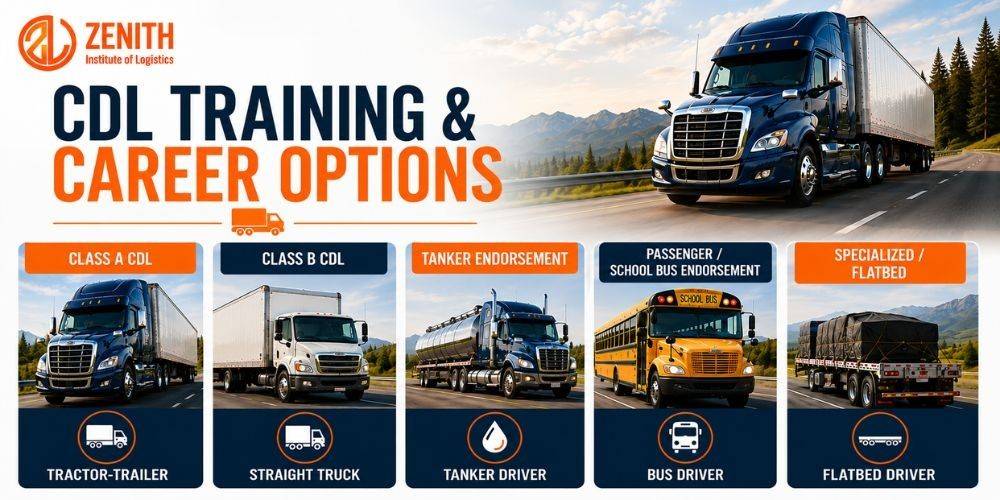
Class A CDL Training
Learn to operate tractor-trailers and other combination vehicles with Class A CDL training This training prepares you for local, regional, and over-the-road (OTR) trucking careers.
Class B CDL Training
Class B CDL training prepares you to drive straight trucks, dump trucks, box trucks, and buses. It’s a great option for local delivery, construction, and passenger transportation jobs.
Endorsement Training
Specialized training that qualifies you to operate certain commercial vehicles or haul specific types of cargo.
- Hazmat (H): Transport hazardous materials.
- Tanker (N): Haul liquid or gas cargo in tank vehicles.
- Doubles/Triples (T): Pull double or triple trailers.
- Passenger (P): Operate buses and other passenger vehicles.
- School Bus (S): Drive school buses and transport students safely.
Entry-Level Driver Training (ELDT) Requirements
The FMCSA’s ELDT requirements apply to first-time CDL applicants and drivers seeking certain endorsements. to complete training from an approved provider before taking the CDL skills test.
- Who needs ELDT? First-time Class A/Class B CDL applicants and drivers seeking certain endorsements.
- Training Provider Registry (TPR): Training must be completed through an FMCSA-approved provider.
- CDL Skills Test: After your training is recorded in the TPR, you’re eligible to take the CDL skills test.
What You’ll Learn During Truck Driver Training
Classroom Training
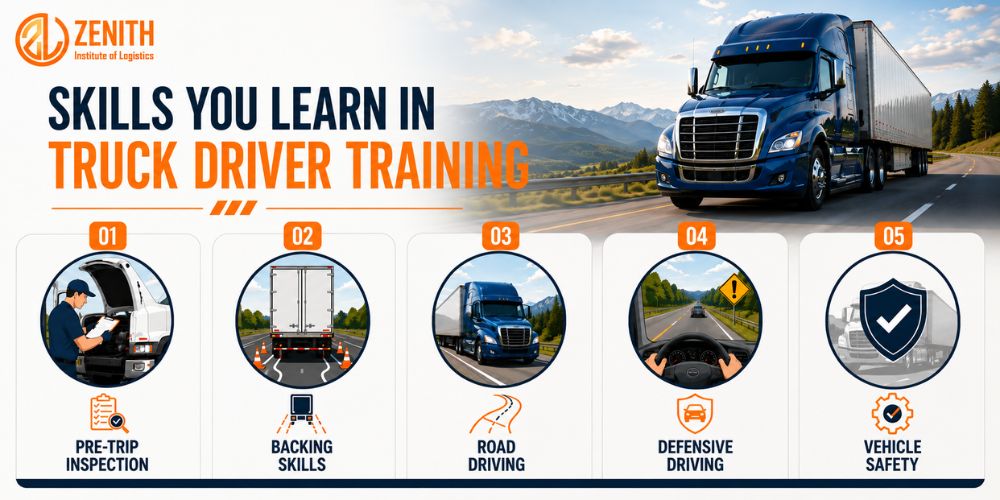
Learn the fundamentals of commercial driving, including CDL laws, DOT regulations, Hours of Service (HOS), logbooks, and vehicle systems.
Pre-Trip Inspection
Practice pre-trip inspections by checking the engine compartment, tires, lights, brakes, and coupling system to ensure your vehicle is safe before every trip.
Backing Skills
Develop essential backing techniques, including straight-line backing, offset backing, alley dock, and parallel parking.
Road Driving
Gain real-world driving experience by practicing lane changes, turns, highway driving, defensive driving, and railroad crossings.
Common Mistakes New CDL Students Make
Avoid these common mistakes to improve your chances of passing the CDL test:
- Skipping pre-trip inspections: Practice your inspection routine every day.
- Not studying the CDL manual: Know the rules and regulations before testing.
- Poor shifting technique: Practice smooth and timely gear changes.
- Looking too close ahead: Keep your eyes up and scan the road ahead.
- Not using mirrors properly: Check your mirrors frequently to stay aware of your surroundings.
Essential Truck Driver Skills You’ll Develop
During truck driver training, you’ll build the practical skills needed to drive safely and confidently on the road.
- Vehicle Inspection: Perform thorough pre-trip and post-trip inspections.
- Defensive Driving: Identify hazards and respond safely to changing road conditions.
- Space Management: Maintain safe following distances and proper lane positioning.
- Hazard Awareness: Recognize and react to potential driving risks.
- Time Management: Plan schedules and meet delivery deadlines responsibly.
- Route & Trip Planning: Choose efficient routes and prepare for each trip.
- Cargo Securement: Ensure loads are properly secured before driving.
- Communication: Communicate effectively with dispatchers, customers, and other drivers.
- Fuel Efficiency: Practice driving habits that help reduce fuel consumption.
How Long Does Truck Driver Training Take?
The length of truck driver training depends on the program and your schedule. Learn more about how long it takes to get a CDL and what can affect the timeline. Most students can earn their CDL in just a few weeks.
| Training Program | Typical Duration |
| Full-Time | 3–8 Weeks |
| Part-Time | 8–12 Weeks |
| Company-Sponsored | Varies by Employer |
How Much Does Truck Driver Training Cost?
The cost of truck driver training varies by school, program, and location. See our guide to CDL training costs for a closer look at tuition and other expenses. Many CDL schools offer financial assistance to help make training more affordable.
- Tuition: Costs vary depending on the training program.
- Financial Aid: Available for qualified students.
- Scholarships: Some schools and organizations offer CDL scholarships.
- Employer-Sponsored Training: Some trucking companies pay for training in exchange for a work commitment.
- Payment Plans: Many CDL schools provide flexible payment options.
Career Opportunities After Truck Driver Training
Completing truck driver training can open the door to a variety of commercial driving careers, including:
- Local Driver: Deliver freight within a local area and return home daily.
- Regional Driver: Drive within a specific region with regular home time.
- OTR (Over-the-Road) Driver: Haul freight across multiple states on long-distance routes.
- Tanker Driver: Transport liquids or gases in specialized tank vehicles.
- Flatbed Driver: Haul oversized or open-load cargo on flatbed trailers.
- Refrigerated (Reefer) Driver: Deliver temperature-controlled freight, such as food and medical supplies.
- Hazmat Driver: Transport hazardous materials with a Hazmat endorsement.
- Owner-Operator: Run your own trucking business after gaining industry experience.
Truck Driver Salary Expectations
Truck driver pay varies based on your experience, location, the type of freight you haul, and the employer you work for. Earning CDL endorsements, such as Hazmat or Tanker, can also increase your earning potential.
Factors that affect truck driver pay include:
- Experience: More experience often leads to higher pay.
- Location: Wages vary by state and region.
- Freight Type: Specialized loads typically pay more.
- Endorsements: Additional CDL endorsements can boost earnings.
- Employer: Pay and benefits differ by trucking company.
Tips for Success During Training
Make the most of your CDL training by following these simple tips:
- Study daily to stay prepared.
- Practice pre-trip inspections regularly.
- Ask questions and learn from your instructors.
- Get enough rest before each training session.
- Focus on safety, not speed.
- Learn from your mistakes and keep improving.
FAQs
1. How much does truck driver training cost?
Costs vary by school, program, and location.
2. What trucking companies pay for CDL training?
Many trucking companies offer paid CDL training or help cover training costs.
3. Is trucking a good career choice?
Yes, trucking offers strong job demand and competitive pay.
4. How long does truck driver training take?
Most full-time programs take 3–8 weeks.
5. Do truck drivers make $100,000 a year?
Yes, experienced drivers in specialized roles can earn that amount.
6. What tips do you have for someone starting a trucking career?
Choose a quality CDL school, practice often, and focus on safety.
Final Verdict
Choosing the right truck driver training program can help you build the skills and confidence needed to earn your CDL and begin a successful commercial driving career. Look for a program that offers classroom instruction, hands-on driving practice, and proper CDL test preparation. Consistent practice and guidance from experienced instructors can help you become a safer, more confident driver. With the right training and preparation, you can develop the knowledge and practical skills needed to pass your CDL test and take the next step toward your trucking career.
Recommended Posts
Pre-Trip Inspection Checklist: A Comprehensive Guide to Keeping Your Truck Road-Ready
September 2, 2025

Six Safety Tips For Truck Drivers
November 29, 2024