

CDL A vs CDL B: Key Differences, Jobs, and License Requirements
 EMILY
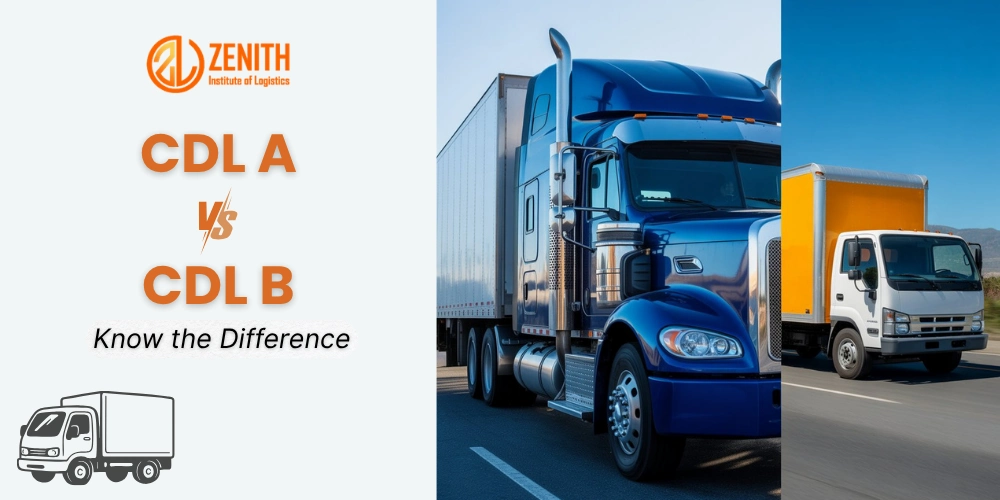
EMILY A Commercial Driver’s License (CDL) is required for operating large or heavy vehicles for work. If you want to become a truck driver, bus driver, or delivery vehicle operator, getting the right CDL is one of the first steps in your career.
The two most common types are CDL A and CDL B. Both licenses allow you to drive commercial vehicles, but they are used for different vehicle types, job roles, and weight limits. Understanding the difference between CDL A and CDL B can help you choose the best path for your future.
What Is a CDL License?
A CDL, or Commercial Driver’s License, is a special license required for driving large commercial vehicles. In the United States, drivers need a CDL when operating vehicles above a certain weight limit or carrying passengers or hazardous materials.
There are two main types of CDL licenses:
- Class A CDL
- Class B CDL
Each class is designed for different vehicles and job responsibilities.
What Is a CDL A License?
A CDL-A license allows drivers to operate combination vehicles with a Gross Combination Weight Rating (GCWR) of 26,001 pounds or more, in which the towed vehicle weighs more than 10,000 pounds.
CDL A is the most flexible type of commercial license because it allows drivers to operate a wider range of vehicles.
Common vehicles driven with a CDL A include:
- Tractor-trailers
- Semi-trucks
- Flatbed trucks
- Tanker vehicles
- Livestock carriers
- Double and triple trailers
Many long-haul trucking jobs require a CDL A because these drivers often transport heavy loads across long distances.
What Is a CDL B License?
A CDL B license is used for single vehicles with a Gross Vehicle Weight Rating (GVWR) of 26,001 pounds or more. Unlike CDL A, the vehicle being towed must weigh less than 10,000 pounds.
CDL B is commonly used for local driving jobs and shorter routes.
Common vehicles driven with a CDL B include:
- Box trucks
- Dump trucks
- Cement mixers
- Delivery trucks
- Garbage trucks
- School buses
- City buses
A CDL B is often a good choice for people who want to work locally and return home every day.
If you’re wondering about the best career opportunities after completing your Class B CDL training, check out this detailed blog that breaks down top job options, growth potential, and what to expect in the industry. It’s a helpful guide to get your career moving in the right direction
CDL A vs CDL B: Main Differences
The biggest difference between CDL A and CDL B is the type of vehicle you can drive.
A CDL A is designed for combination vehicles that pull heavy trailers, while a CDL B is for single heavy vehicles.
Here are some other key differences:
CDL A drivers can operate combination vehicles, while CDL B drivers operate single heavy vehicles.
CDL A allows you to tow trailers weighing more than 10,000 pounds, while CDL B only allows smaller trailers under that limit.
CDL A jobs are often long-distance or regional, while CDL B jobs are usually local.
Drivers with a CDL A generally have more job opportunities and higher earning potential compared to CDL B drivers.
Drivers with a CDL A often have more career options because they can drive both Class A and some Class B vehicles.
Types of Vehicles You Can Drive
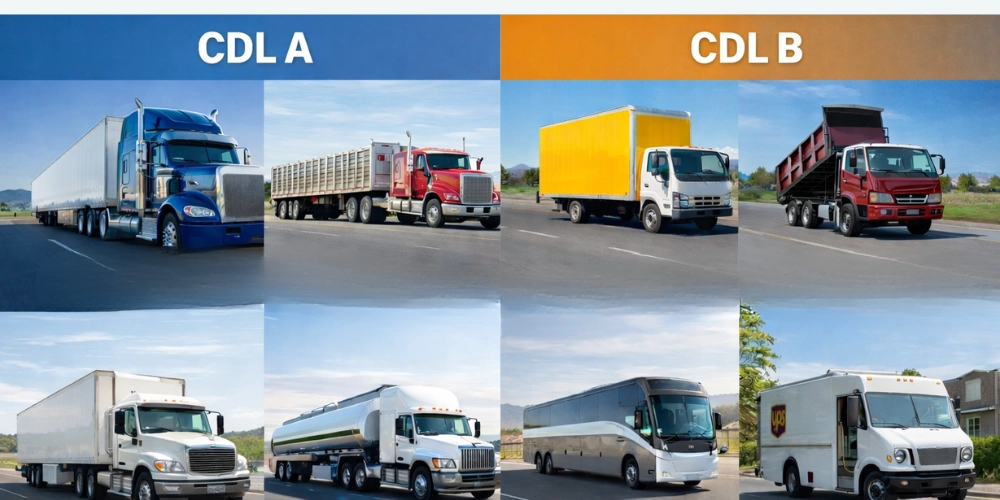
Choosing between CDL A and CDL B depends on the type of vehicle you want to operate.
With a CDL A, you can drive:
- Tractor-trailers
- Tanker trucks
- Flatbed trucks
- Livestock carriers
- Refrigerated trucks
With a CDL B, you can drive:
- Box trucks
- Straight trucks
- School buses
- Delivery trucks
- Dump trucks
If you want to work in over-the-road trucking, CDL A is usually the better option. If you prefer local driving and more regular hours, CDL B may be the right fit.
Training Requirements for CDL A and CDL B
Both CDL A and CDL B require training before taking the skills test. Drivers usually attend a truck driving school or CDL training program.
CDL training often includes:
- Classroom instruction
- Vehicle inspection training
- Behind-the-wheel practice
- Road safety lessons
- Test preparation
CDL A training is usually longer because drivers must learn how to handle larger combination vehicles. CDL B training may be shorter because the vehicles are smaller and easier to operate.
Many training schools also help students prepare for endorsements, such as:
- Tanker endorsement
- Hazmat endorsement
- Passenger endorsement
- School bus endorsement
These endorsements can increase job opportunities and earning potential.
How to Choose the Right CDL for Your Career
The best CDL for you depends on your career goals, income expectations, and lifestyle.
A CDL A may be the better choice if you:
- Want more job opportunities
- Plan to drive long distances
- Want a higher earning potential
- Are comfortable spending time away from home
A CDL B may be better if you:
- Prefer local driving jobs
- Want to be home daily
- Like driving buses or delivery trucks
- Want shorter training time
Before choosing, think about the kind of work schedule and driving experience you want.
Can You Upgrade from CDL B to CDL A?
Yes, drivers can upgrade from CDL B to CDL A later in their career.
Many drivers start with a CDL B because it is easier to obtain and provides local job opportunities. After gaining experience, they may complete additional training and testing to upgrade to CDL A.
Upgrading can open the door to higher-paying trucking jobs and more vehicle options.
Final Thoughts
The decision to choose between CDL A and CDL B is an important step for your future in the trucking industry. Before making a choice, consider your career goals, the types of vehicles you want to drive, your preferred work schedule, and your income expectations. CDL A is a strong option for drivers who want more job opportunities, higher pay, and long-distance routes. CDL B is ideal for drivers who prefer local driving jobs and being home more often.No matter which CDL you choose, the right training can help you build a successful career on the road. At Zenith Institute of Logistics, students receive hands-on training, experienced instruction, and the support needed to prepare for CDL testing and real-world driving. Take the time to choose the license that fits your goals and start building your future with confidence.
Recommended Posts
What Can You Do With a CDL? Jobs, Careers, and Opportunities
October 15, 2026
Can You Get a CDL With a DUI or DWI? Eligibility Guide
June 11, 2026